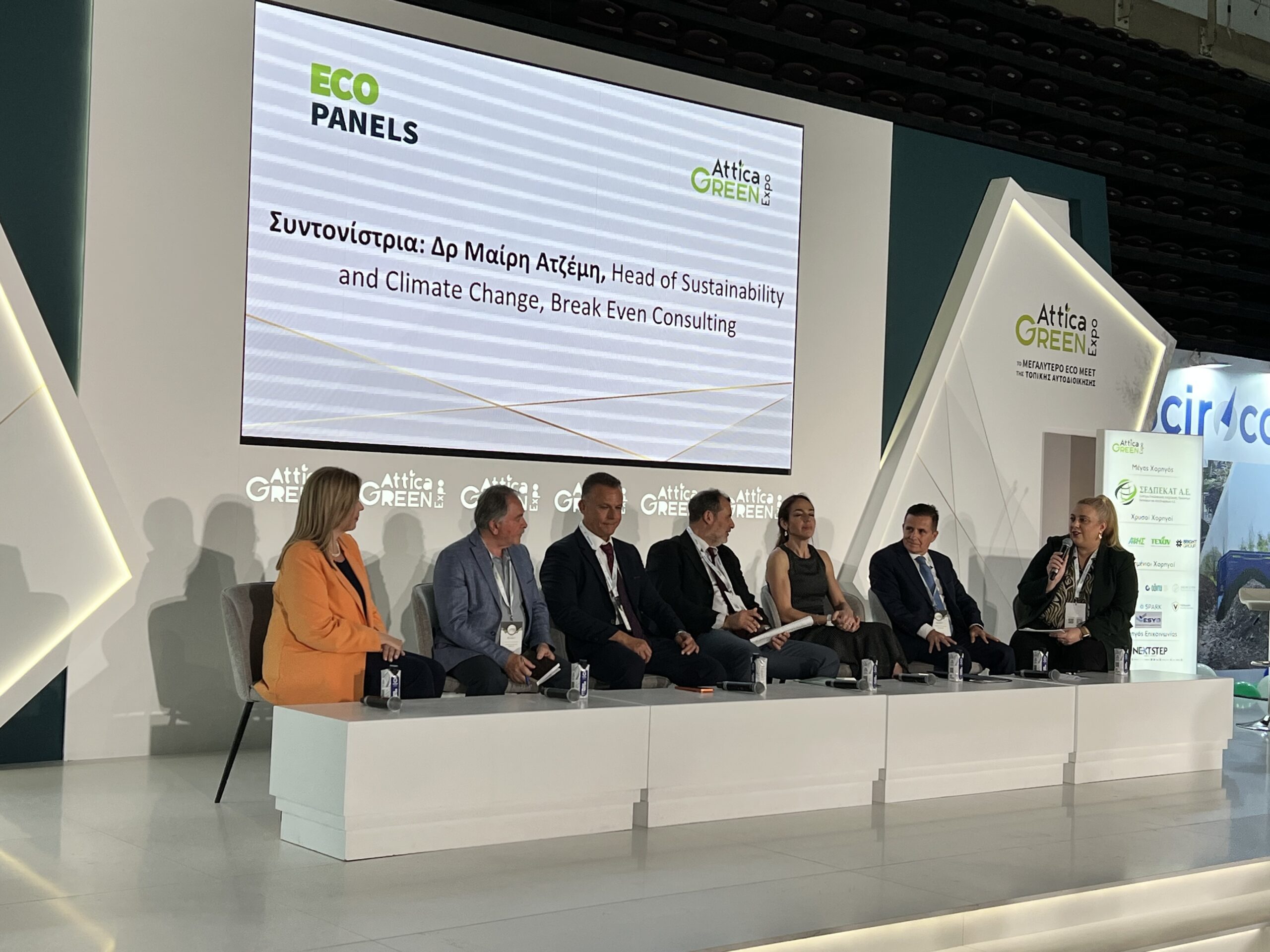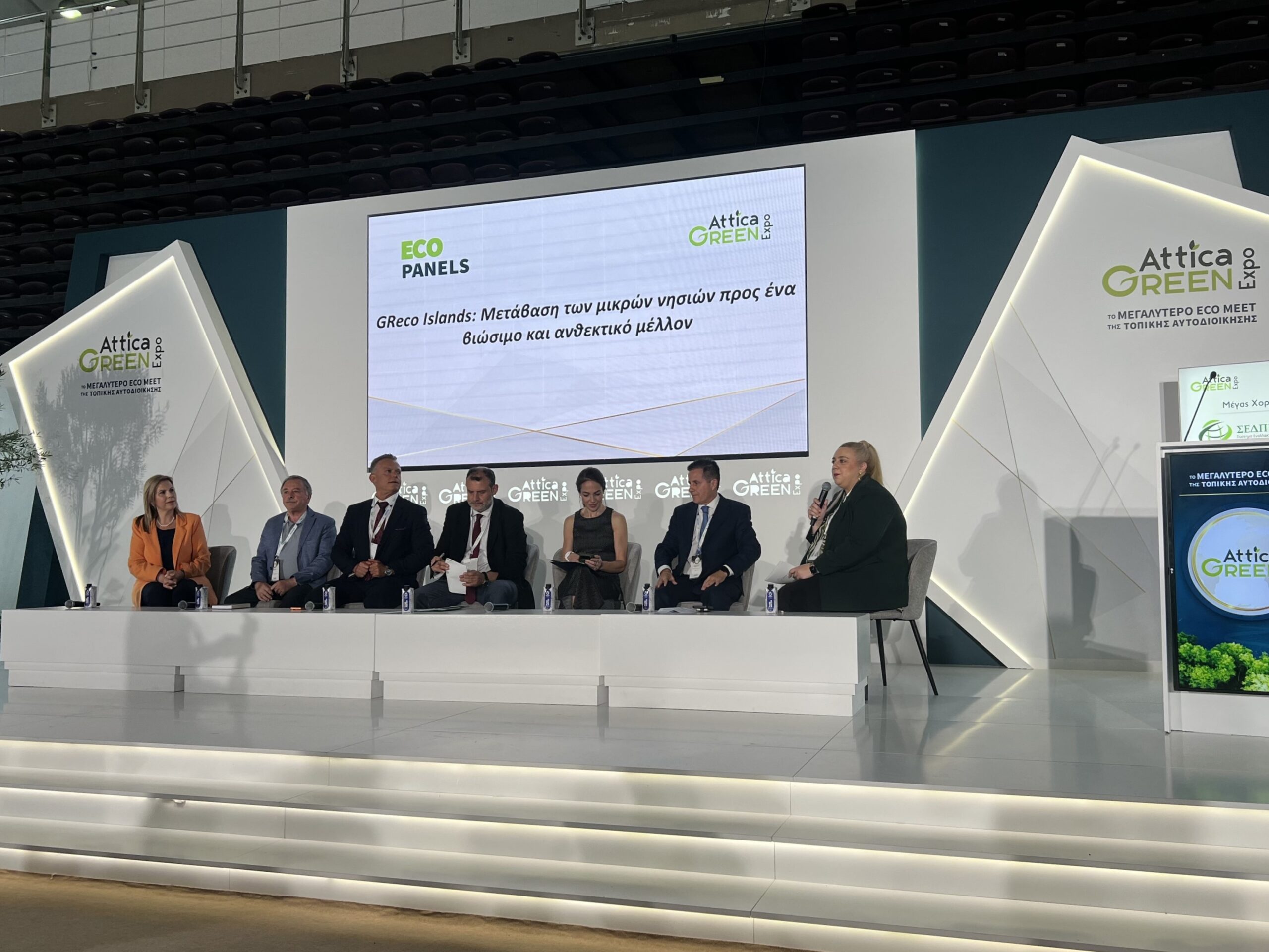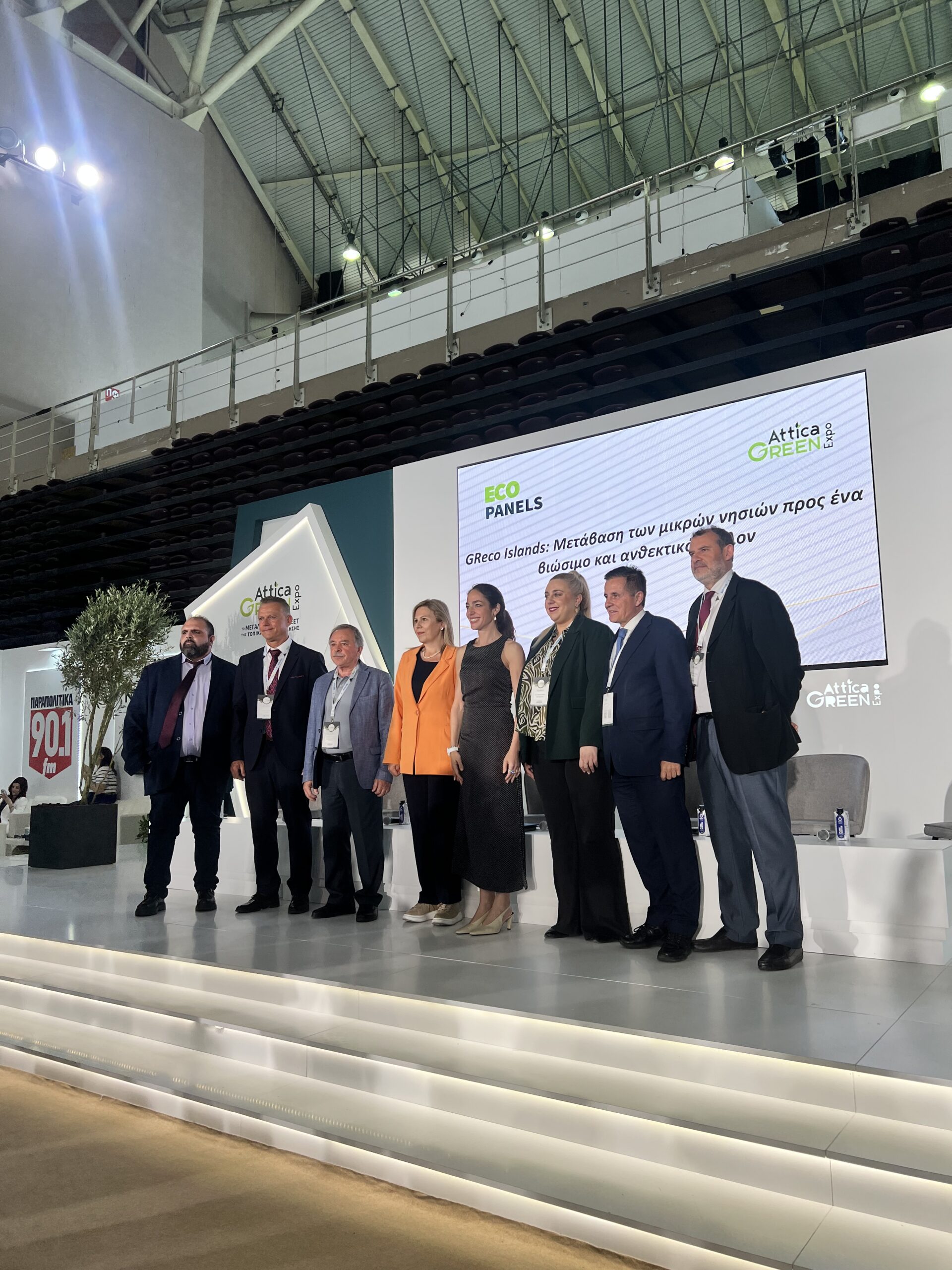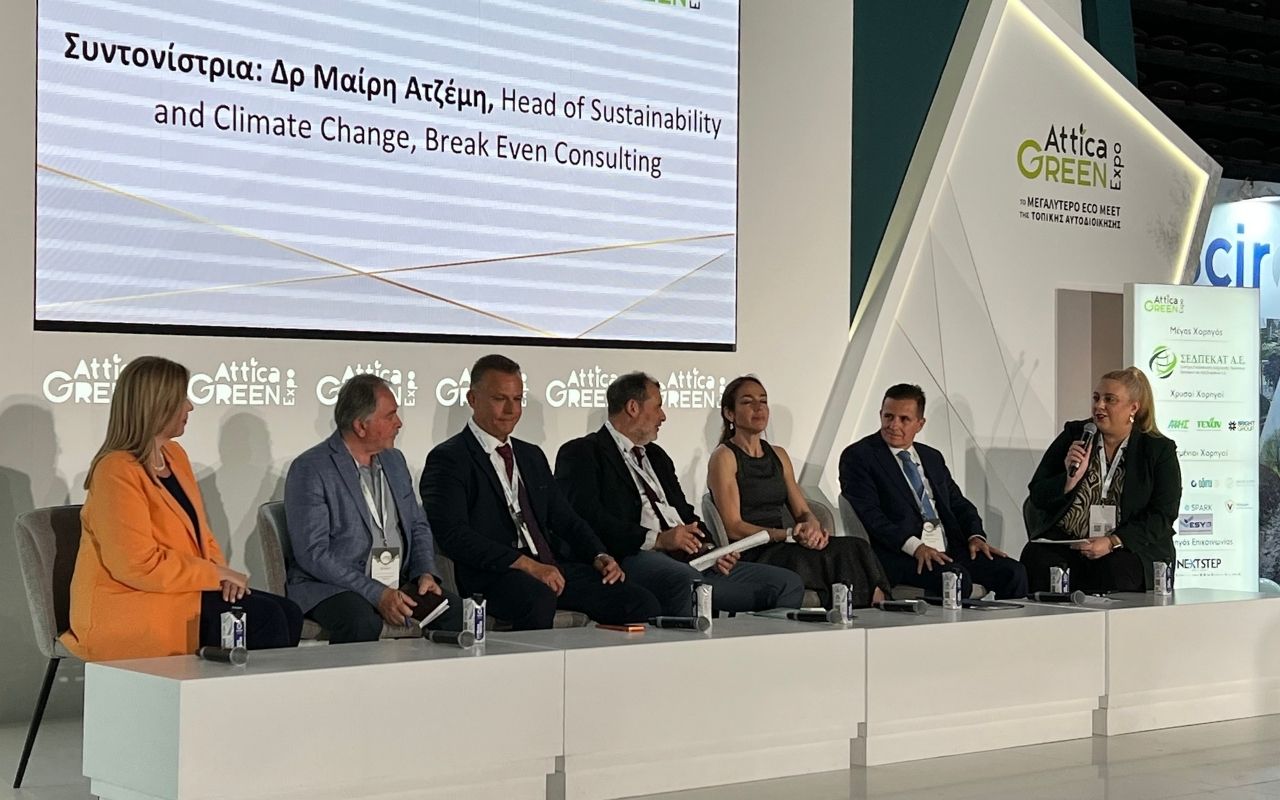
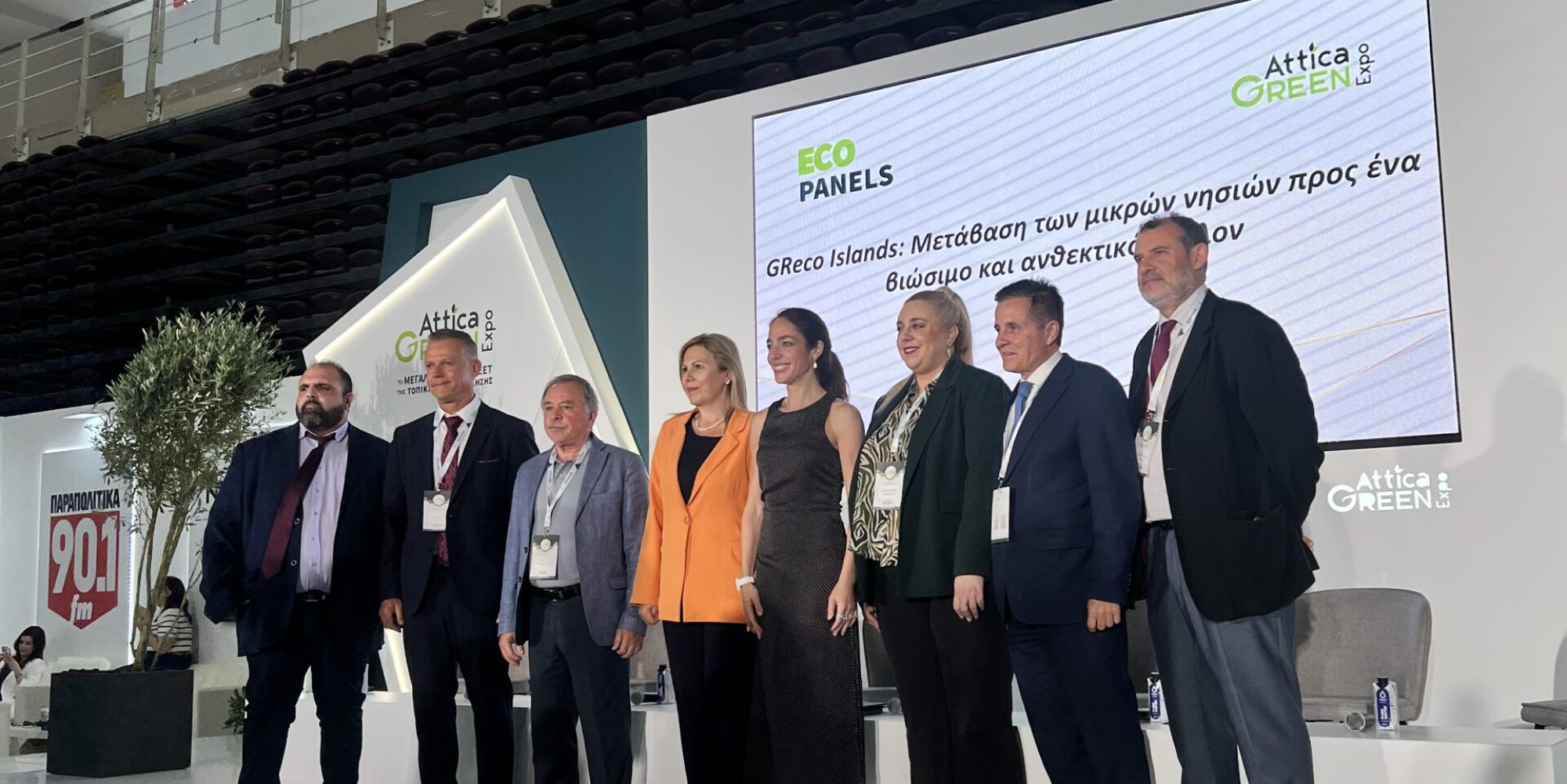
Break Even Consulting participated in the Green Attica Expo, coordinating the panel entitled “GR Eco Islands: Transitioning Small Islands towards a Sustainable and Resilient Future,” which focused on the challenges, opportunities and development prospects of small Greek islands within the framework of the GR Eco Islands Initiative.
The panel was moderated by Dr. Mairi Atzemi, Head of Sustainability & Climate Change at Break Even Consulting, with the participation of:
Domna Michailidou, Minister of Social Cohesion and Family
Konstantinos Aravossis, Professor at the National Technical University of Athens and Vice President of the Regulatory Authority for Waste, Energy and Water
Professor Klavdios Papadopoulos, Director of the UNESCO Chair on Green Innovation and Circular Economy
Angelos Tsakanikas, Professor of Economic Evaluation of Technology, Innovation and Entrepreneurship Systems at the National Technical University of Athens and Head of the Technology Transfer Office at NTUA
Fotis Maggos, Mayor of Leipsoi
Ioannis Mastorakos, Mayor of Kalymnos
Eleonora Georga, Mayor of Tilos
The discussion began with the human dimension of the transition, with the Minister of Social Cohesion and Family, Domna Michailidou, highlighting the connection between regional development, decentralisation and addressing the demographic challenges faced by the country’s island communities.
In this context, she stressed that green technology can serve as a key driver of connectivity and accessibility for islands, contributing to the improvement of healthcare services through telemedicine, the strengthening of digital infrastructure, facilitating remote work and, more broadly, creating conditions that make islands more attractive to young people and young couples seeking new life opportunities. Creating sustainable island communities requires connecting multiple different policy areas and economies into a unified strategic vision, in which technology, infrastructure and quality of life are interdependent. At the same time, she underlined that social and environmental policies must be designed with the specific characteristics, needs and limitations of each island community in mind, so that real results can be achieved and local conditions effectively addressed.
Subsequently, Konstantinos Aravossis and Angelos Tsakanikas emphasised that small islands can become living laboratories for sustainable development and innovation, where new technologies, policies and solutions can be tested in real conditions and create examples that can be transferred to larger-scale contexts. They also highlighted the role of innovation, entrepreneurship, scientific knowledge and cooperation between public authorities, academia and local communities as key factors in creating new development opportunities for small islands.
From the perspective of local government, Mayors Fotis Maggos, Ioannis Mastorakos and Eleonora Georga presented the particular challenges as well as the significant opportunities faced by their islands, focusing specifically on everyday issues affecting the daily operation of local communities. They highlighted increased transport costs, water management, healthcare services, as well as the possibility of remote work and digital interconnection. At the same time, they stressed the importance of securing adequate funding instruments and resources, as well as supporting local communities to ensure that the strategic objectives of the sustainable transition are translated into tangible results for local communities.